
Scrapbook Digitization in Fort Worth Metro
Professional scrapbook digitization in Fort Worth Metro saves your fragile family history. Stop the decay and schedule your scanning today.
From the studio
See the work
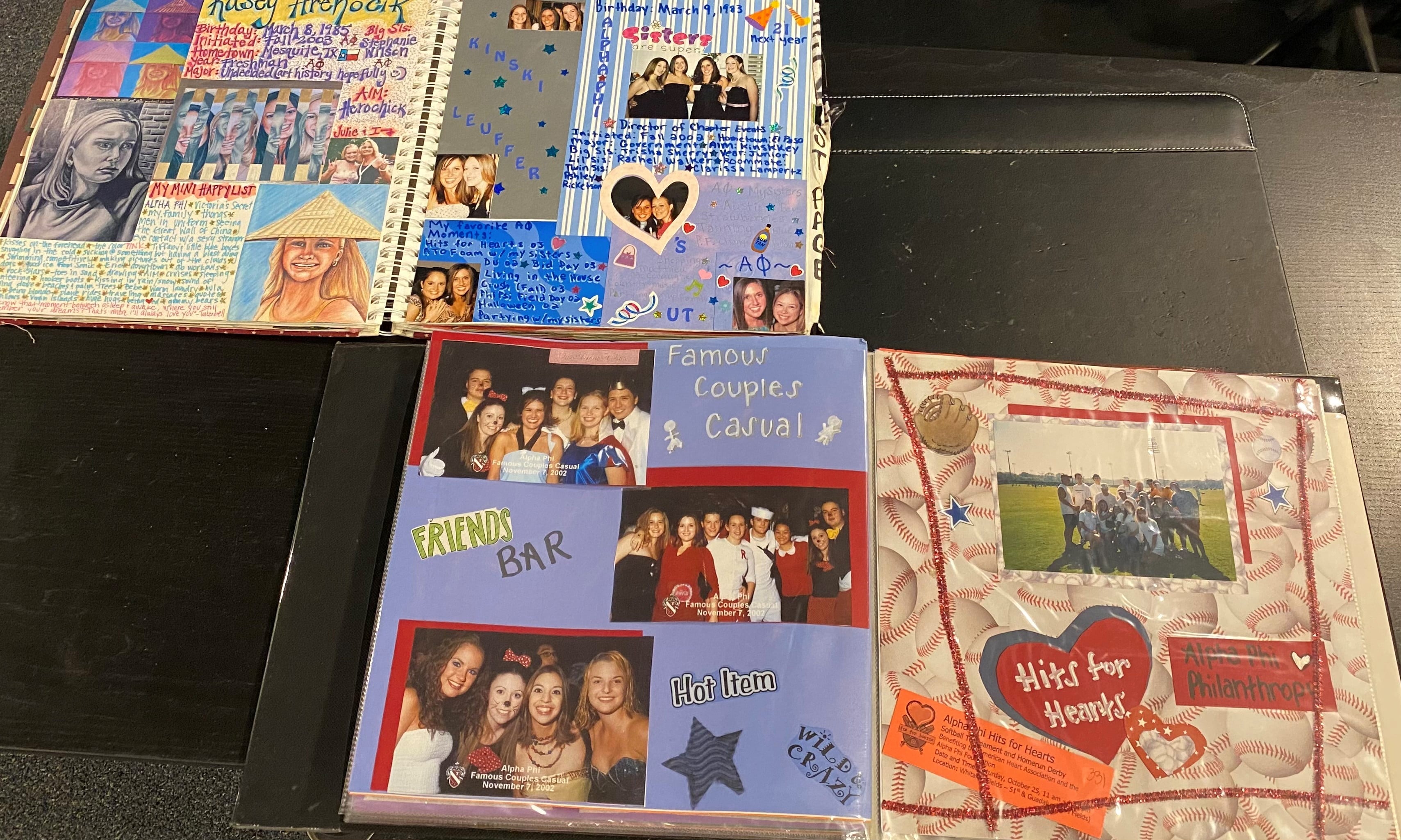
Preserving Fragile Scrapbooks Across the Fort Worth Metro
Are you noticing the black construction paper edges crumbling into dust, photos sliding loose from dried-out glue mounts, or handwritten captions fading away every time you open that vintage family scrapbook? These are active signs of chemical decay and structural failure that require immediate professional handling before the visual context of your family's history is lost forever. WeScanFilm is standing by to meticulously digitize your fragile pages and stop this deterioration in its tracks.
Warning Signs of Scrapbook Failure
Crumbling or Flaking Page Edges
You open the scrapbook and immediately notice tiny flakes of black, gray, or yellowed paper breaking off the edges, leaving a dusty mess on the table. The pages feel stiff, brittle, and tear easily even when you try to turn them with the utmost care. This means the paper's fibers have chemically broken down due to age, environmental stress, and the inherent acidity of vintage paper manufacturing.The structural integrity of the page is completely gone at this stage. If ignored, normal handling will accelerate the destruction, causing the margins holding the photos and memorabilia to give way entirely. Eventually, the contents will detach, tear, and become disorganized, turning a curated family history into a box of loose, unidentifiable scraps.
Photos Popping Loose from Dried Glue
As you turn a heavy page, photos slide down from their original positions, or you find old rubber cement and tape that has turned into a yellow, crusty powder. You might even hear the sickening crack of dried adhesive as a loose photo slides out of its corner mounts and onto the floor. Adhesives used in the 1950s, 60s, and 70s were not archival, meaning they eventually dry out, shrink, and lose their chemical bond entirely.A scrapbook is ultimately about context, as the layout itself tells a story. Once photos detach from the specific handwritten captions underneath them, that specific memory becomes disjointed. You lose the crucial details of who, what, and when forever once the physical connection between the photo and the page is broken.
The Magnetic Album Death Grip
Your photos are trapped under yellowing, crinkly plastic sheets with a sticky cardboard backing, and when you try to gently lift a corner of a picture, it feels like it is cemented in place. The highly acidic glue used in these popular vintage albums creates a permanent chemical bond with the photo paper. It is literally eating into the emulsion of the image from the back forward.Trying to rip them out will tear the photo itself, destroying the very memory you are trying to save. These pages must be digitized in place as full layouts before the acid completely destroys the images. Specialized overhead scanning captures the photos through the plastic without risking a catastrophic tear.
Fading Ink and Disappearing Captions
The ballpoint pen, fountain pen, or marker used to write names, dates, and little stories next to the photos is looking washed out, turning brown, or bleeding into the paper. Non-archival inks react poorly to ambient light, humidity fluctuations, and the acid in the paper itself. This causes the pigment to break down at a microscopic level, slowly erasing the text.The handwriting is often the most valuable and personal part of a scrapbook. Once those names and dates fade to nothing, the historical record is lost, leaving you with faces you can no longer identify. Digitizing the pages now locks in the current state of the ink before it ghosts away completely.
Common Causes of Scrapbook Deterioration
Extreme Attic Heat and Humidity Cycles
In the Fort Worth Metro, storing family albums in an attic or uninsulated garage means subjecting them to brutal summer heat and freezing winter drops year after year. This constant, extreme expansion and contraction warps pages, destroys bindings, and rapidly accelerates the chemical decay of old paper. Heat bakes the moisture out of the adhesives, while humidity introduces mold spores to the organic paper fibers.The solution involves carefully digitizing the entire book flat to capture the layouts exactly as they sit today. Once the digitization is complete, the physical book must be relocated to a climate-controlled interior closet inside the home. This ensures the original artifact survives while the digital versions can be safely shared with the whole family.
Acidic Construction Paper Degradation
Many older scrapbooks were constructed using cheap, highly acidic black or gray paper. Over the decades, this acid literally burns through the paper itself and eats into the backs of the photographs attached to it. You can often smell this chemical breakdown as a distinct, sour, musty odor the moment you open the cover.Because removing the photos would destroy them, we use specialized overhead capture or large-format flatbed systems to digitize the fragile page exactly as it sits. This stops the clock on the visual damage without having to dismantle the highly acidic, brittle pages. It preserves the exact look of the vintage paper without letting its toxicity ruin the digital archive.
Destructive Vintage Adhesives
Tape, rubber cement, and early glue sticks contain harsh solvents that were never meant to last for decades. Over time, these chemicals yellow and eat through photo emulsion, which is why you often see brown, rectangular stains seeping through the front of vintage photos right where the tape sits on the back. The adhesive is actively destroying the image from the inside out.High-resolution scanning captures the page before that chemical staining completely ruins the subjects' faces. By digitizing the full layout, the visual context and story remain perfectly intact. This allows you to preserve the memory even if the physical photo continues to degrade from the old glue.
Failing Mechanical Bindings
Vintage scrapbooks are incredibly heavy, often loaded with thick photos, newspaper clippings, telegrams, and heavy cardstock. Over time, the sheer weight of these loaded pages pulls against failing string, rusted metal posts, or brittle leather bindings. As the binding gives way, pages rub against each other, scratching the surface of the photos and tearing the fragile punch holes.When a binding fails, the scrapbook loses its structural support, making it dangerous to turn the pages normally. We carefully support the spine and isolate each page during the capture process to prevent further tearing. This ensures the entire sequence of the book is recorded perfectly, even if the physical covers are falling apart.
What to Expect During the Scrapbook Digitization Process
When you bring your family's history to WeScanFilm, you aren't dropping it into a corporate void—you are handing it directly to the local technicians who will be doing the actual work. We start with a careful intake process, evaluating the binding, the fragility of the paper, and the types of adhesives used to determine the safest capture method. We know that these books hold more than just pictures, so we treat every single album as a unique preservation project rather than a bulk commodity.
We never use auto-feeders or destructive dismantling techniques that risk tearing your fragile family artifacts. Every single page is meticulously handled and captured using high-resolution, overhead or specialized flatbed equipment to ensure edge-to-edge clarity without stressing the spine. This process preserves the exact placement of photos, handwritten notes, ticket stubs, and newspaper clippings, locking in the historical context of the layout.
You get real-time project access to view your digital files as they are completed, ensuring complete transparency throughout the entire process. Finally, your original scrapbooks are safely returned to you, alongside your new, easily shareable digital archive on a modern storage format. You walk away with a pristine digital copy of your family's legacy, knowing the fragile originals are secure and untouched.
Scrapbook Digitization Coverage Across Fort Worth Metro
Our local studio provides meticulous, preservation-first scrapbook digitization for families and organizations throughout the entire region. We proudly serve the following communities:
Fort Worth & Inner Suburbs: Fort Worth, TX, Haltom City, TX
Mid-Cities & Northeast Tarrant: Arlington, TX, Keller, TX, Southlake, TX, Grapevine, TX, North Richland Hills, TX
Denton County & North: Roanoke, TX, Denton, TX
Greater Dallas: Dallas, TX
Related Services for Your Family Archives
Depending on how your family's collection was stored, you might have different types of albums or loose media requiring slightly different approaches. Many families bringing in vintage scrapbooks also utilize our photo scanning services for standard slip-in albums or loose prints that have already detached from their pages. If your scrapbooks contain severely damaged images, our photo restoration process can digitally repair cracks, tears, and severe chemical staining to bring those specific memories back to life.
Stop the Decay and Preserve Your Scrapbooks Today
Every time a fragile scrapbook is opened, handled, or exposed to fluctuating temperatures, a little bit of its structural integrity and visual clarity is lost. Do not wait until the glue completely fails or the handwritten captions fade beyond recognition. The layout of these pages tells a specific story that disappears the moment the book falls apart.
Preserve the complete story exactly as your relatives laid it out. Reach out to WeScanFilm today via our contact page, and let our local team help you secure your family's history for generations to come.
Start Your Project
Tell us what you'd like preserved.
Send a few details and WeScanFilm will come back with a plan and a quote. No obligation, and your originals never leave our care.
Contact Us
Loading form. If it does not load, please use the other contact options on this page.
By submitting this form you agree to our Privacy Policy and Terms of Service. California residents can review their privacy choices.
Preserve Your Past
Don't let another memory fade.
Bring your photos, slides, tapes, and reels to our Fort Worth studio — or ship them from anywhere. We'll preserve your family's history and hand you back files you can share in seconds.
12805 Harmon Rd Suite 215, Fort Worth, TX